Top 10 Largest Demographic UUPGs . . .

Some people might think that the unengaged unreached people groups are those peoples who are few in number. However, that is often not the case. Instead, they are often demographically large. So, we might ask, "Why have Great Commission Christians not sent messengers to engage them?"

Sometimes they are unengaged because they are isolated or difficult to reach geographically.  In other words, they are difficult to access and as a result often do not have access to a gospel witness.  The following list is the top 10 largest demographically Southeast Asian unengaged unreached people groups.


The Importance of Engaging UUPGs

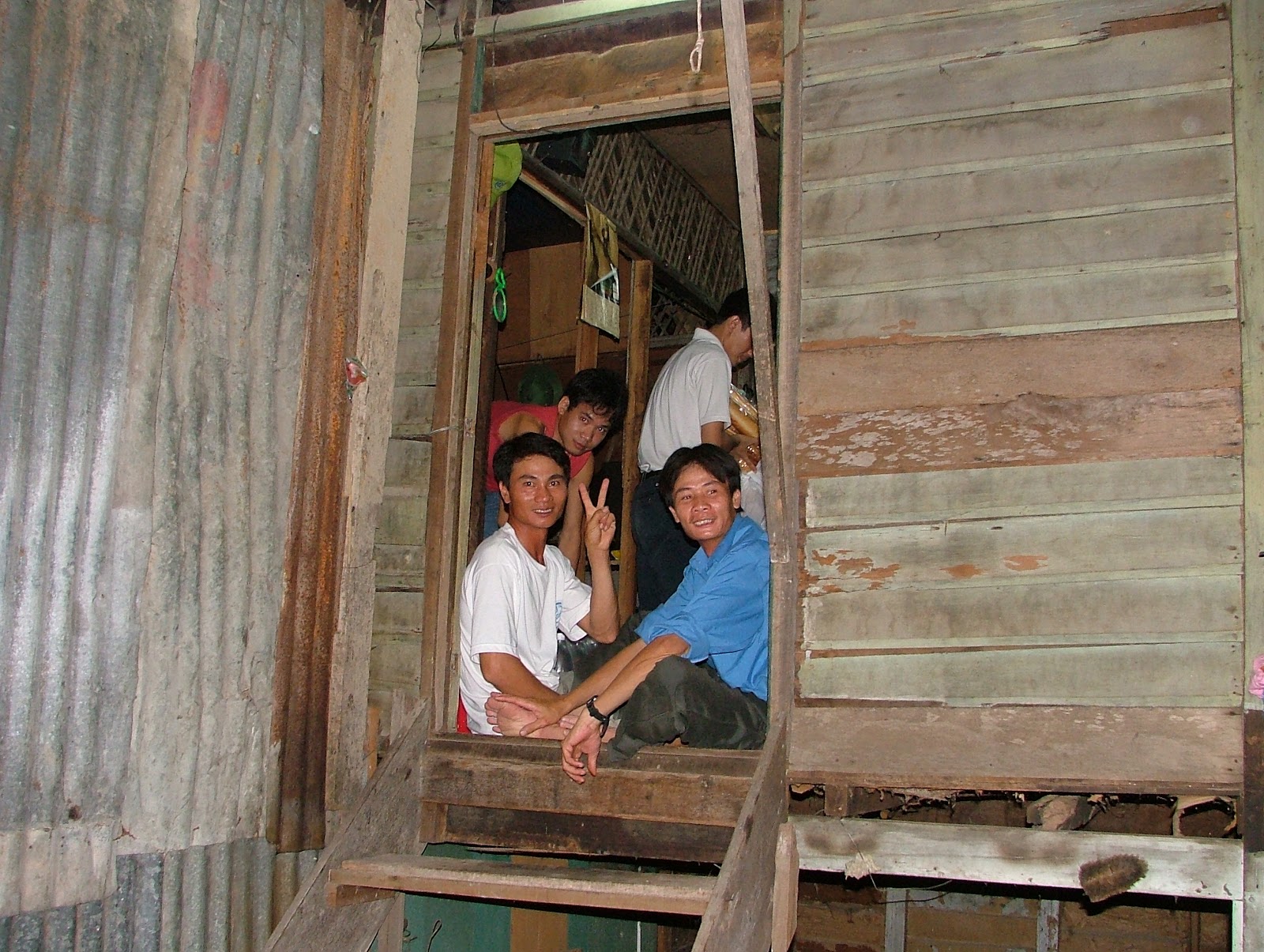
Vui is a 24-year-old Vietnamese man who came to Malaysia about 3 years ago.   Vui is young, energetic and industrious.   He, like many in his generation (80% of whom are under 35 years of age) out of the 70 million in population, was looking for a better life economically.   He ventured to Malaysia looking for a chance to move out of poverty for him and his family.   Vui’s parents and extended family pitched in the money as much as they could in order for him to come to this neighboring country for employment.   Yet, he had to take out a big loan from a bank in Vietnam in order to meet the US $2000 initial costs of an overseas contract laborer.

Once in Malaysia, the only goal Vui had in mind was to repay the loan of both the bank and his family as quickly as possible.   Unfortunately Vui’s boss was an unscrupulous person.   The labor contract was never honored by the company where he worked.   His company gave him half of what they promised monthly.

Vui’s future became hopeless.   All the dreams of having a better life were now vanished.   He was desperate and depressed.   When the company did not have work, Vui was laid off temporarily.   He spent all he had on drinking liquor.  When the money ran out, he started to borrow from his friends but no avail.

A Vietnamese Christian who lived near his apartment told him about a group of Christian who met regularly in a town nearby.   At the first invitation to church, Vui smeared at the idea of attending a Christian church.  This is a western religion that his neighbors and the authority in his village often warned everyone “Beware of this anti-Vietnamese culture religion!”

When Vui saw the love and joy from his Christian friends (even among those who were laid off like him), Vui became curious.   He started reading all the tracts & the Bible.   One story that struck him was the flood story. Vui remembered vaguely the story of the sea-god in Vietnamese literature.   The sea-god because his bride-to-be was taken from him by the mountain-god, decided to raise the water as high as he could in order to destroy the mountain-god so he could get his bride back.   In the end, everyone in the flood died, only the mountain-god and his bride survived.   He felt that the Bible stories were not distant and he came to a conclusion that this is not a western religion but a religion for everyone.

Within 2 months, Vui gave his life to Jesus and was baptized.   He loved to witness to other Vietnamese.   His employer transferred him to a better position with better pay.   He is paying off his debt little by little.   He quit drinking & smoking.  He is helping to lead a cell-group Bible study and also takes part in the church services.

Vui has already completed his time in Malaysia.   He has shared his conversion experience with his family.   His mother and siblings are open, but his dad is indifferent.   Vui is concerned that he will be labeled as “a betrayer to his ancestors” since he no longer worships the deceased family members or burning joss sticks.   In addition, the authority in his village has been giving a hard time to his returned friends who became Christians in Malaysia.   In some instances, all their Bibles and materials have been confiscated.   Vui is determined to memorize as many Scriptures and praise songs as possible so that he can be an effective witness for Christ even without any written material.   He loves to share the story of salvation.   He has learned Bible storying through many of the Bible stories.   He is praying that his whole family and clan will become believers through his witness and sharing.

It is so important for Southern Baptist churches to engage unengaged unreached people groups.   In doing so, the congregation can be more focused and the missions become more personalized.   A Vietnamese Baptist Church in the USA came to do the prayer walk, evangelism and training.  Non-Vietnamese Christians came to teach English, songs, mime, crafts, to do prayer walk, to give personal testimonies through interpreters …. The volunteers have been great blessings to Vietnamese.

We are Evangelicals ! ! !

People have different reactions when one claims to be an Evangelical.  For some, they react with emotionalism based upon what they see on religious TV.  For others, they allege evangelicals advocate a form of self-righteousness.  Then there are the memories many of us who were raised evangelical: strong, caring family environments; a sense of belonging, with friends who like to talk about the “things of the Lord.”   Regardless of our background, it’s important to understand the meaning of the term “evangelical.”

Martin Luther employed the word evangelical to denote a specific doctrinal tradition.  He used it to define those Christians who stressed justification “by faith alone.”   He also emphasized the Bible as the final authority in contrast to the Roman Catholic ecclesiastical system, which allowed a place for tradition and good works along with faith.  In essence, the word arose around truths that are summarized in three ‘solas.’

The first of these was Sola Scriptura – ‘By Scripture alone.’   This entailed the conviction that God’s objective truth was supremely revealed through his Word in the Old and New Testaments, and that the Bible must always take precedence over reason, tradition, ecclesiastical authority and individual experience.

The second was Sola Gratia – ‘By grace alone.’   This was the conviction that God takes the initiative in salvation and the outworking of his plan for the world.   It held that we know the truth first and foremost not because we deduce it rationally from observation of nature, but because the God of truth has revealed it to us.

The third was Sola Fide – ‘By faith alone.’   This emphasized that although God takes the initiative in salvation, he nevertheless elicits our response and ‘includes’ us intellectually, emotionally and physically in the outworking of his purposes.

Our definition of Evangelical reflects these three ‘solas’. We define Evangelical as,
Christians who believe that Jesus Christ is the sole source of salvation through faith in him, have personal faith and conversion with regeneration by the Holy Spirit, recognize the inspired word of God as the only basis for faith and Christian living, and are committed to Biblical preaching and evangelism that brings others to faith in Jesus Christ.
Against this definition, the following pillars support this definition:
  • Christ-Centered – We believe that God’s eternal Word became human in the historical man Jesus of Nazareth, who definitively reveals God to humanity with salvation only comes through Jesus.
  • Conversion – We believe that salvation comes through personal faith and repentance – that is, a discernible reorientation of the sinner’s mind and heart toward God.
  • Biblicism – We believe that through the Scripture, God reveals universal and eternal truth to humankind so that all can grasp it.
  • Commission – We believe that we should actively propagate the Gospel truth through preaching and evangelism.

Counting the Cost

The geographic difficulties that create barriers for the Gospel to reach the Southeast Asian UUPGs are obvious.  Reaching areas that are separated by barriers like water, and mountainous terrain are just the beginning.  There are also linguistic differences that one encounters with each UUPG that create barriers for communicating the Good News.  Then there are barriers such as communicating Christ with oral learners, the elderly or uneducated.

More than these, there are barriers of spiritual warfare.  Among Southeast Asian Peoples a spiritual war is being waged for the hearts and souls of its citizens.  Without doubt the war is largely spiritual in nature as converts to Christianity, (like the apostle Paul) - cause a hostile reaction. Paul illustrates this in I Cor. 4:9 as he says we have become a spectacle to the world.  The apostle Paul undertood well that he and all the faithful believers would have “Spectacular” moments where they would be put on display; moments that most people would like to avoid, but that are designed by God to produce fruit.

As an example, one SEA person stands out as "spectacular" in this moment in time in reaching a particular people group.  As an ex-government official, through a dream that he had on a night bus, he came to faith in the Lord Jesus.  Because of his background in the government, he knew almost all the people in the villages surrounding his home.  As a result, he started five house churches. This however has not come without persecution.  Nevertheless, even in the midst of persecution, this man and the new believers stand firm and have counted the cost of following Christ.

The Gap Between Then and Now

THE NEED FOR FIELD RESEARCH
Written by BKG and JVW

Several months ago a couple of research colleagues and I met with a cross-cultural worker to discuss some questions on a few people groups which were located in his area. The worker promptly assured us that he had reliable data on the peoples in question. He said he needed to go home and email the data to us. In a couple of hours, we received an email with an attachment that he downloaded from the internet. The worker proudly told us that he did his research in less than five minutes and that there was now no reason to waste time and organizational funds by making a trip to these peoples to conduct on- site field research. The problem was that we had already seen the material in question and knew for a fact that it was not accurate.

Too often cross-cultural workers do not spend enough time actually digging deeper and doing field research on their focus people group. Instead, they rely on information garnered from numerous “authoritative” [1] sources. Once they gather this information, they assume that they now “know” the people group. Consequently, they often base strategies and actions on such suspect data.

This article encourages cross-cultural workers to make field research a natural part of their lifestyle. It first considers several reasons why cross-cultural workers should not assume information from “authoritative” sources on people groups is accurate. Second, it discusses several benefits of conducting field research. Lastly, it discusses guidelines on how to conduct field research.

REASONS FOR NOT ASSUMING

Last year, I saw information from the World Christian Encyclopedia (WCE) regarding the Manadonese Malay of Northern Sulawesi in Indonesia. Although I knew the area fairly well, I had never heard of a people group named Manadonese Malay. WCE listed this people group with a population of 110,000 and more than 99% being Muslim.

The city of Manado where supposedly this people group resides has a church on almost every street corner. In addition, the population of the entire city is around 400,000 which would mean one fourth of the population were Muslim.

I checked another source to see if it said the same thing or if they had updated and corrected the information. It turns out that they had updated it, but the new information was even more inaccurate than the previous information. The population was now 700,000, and they were still listed at 99% Muslim.

After further investigation with an SIL friend, we determined that the WCE must be referring to Manadonese language speakers (700,000 according to SIL) who are actually Minahasa people and who, according to the government census, are around 90% protestant.

Unfortunately, however, the ramifications of this mistake went further than just the World Christian Encyclopedia. Joshua Project also added this “phantom” people group to their list as have others, all showing them as an unreached people group.

The accuracy of information from “authoritative” sources varies widely from people group to people group. In some situations, the data comes from reliable sources. Nevertheless, such information is only a portrait bound by time and space, no more and no less. With this in mind, some information may still be relevant and useful while other information may look radically different in the present time and context.

Cultures are not static entities that are enclosed in themselves--isolated islands that are independent and self-sufficient. Instead, they are dynamic and are ever changing so that cultural answers and questions change with time. People groups do not live in vacuums; they live in cultures; and, therefore, are constantly changing. As a result, over time, their demographic size, cultural distinctives, and even their status in regard to evangelization change. In terms of information, what was “then” ultimately becomes invalid for the “now,” constantly prompting a need to conduct field research.

In other situations, the data is not reliable and paints an inaccurate picture. For these, the people groups were often never adequately researched. Additionally, more often than not, when research was conducted, it was often based on information:
  • Dated from thirty to forty year-old sources, and in some instances as far back as colonial times.
  • Published by sources, such as governments, who have a vested interest in portraying the information in a certain light.
  • Collected from various unknown sources, resulting in the reader not knowing the reliability of the source.
  • Written by someone who may have spent a few days “checking out” the people group at some unknown point in time.
For these authoritative sources, oftentimes the root source of the information is impossible to track down. Once information finds its way to one of these authoritative sources, it gains its own legitimacy simply by the fact that it is published and not necessarily due to its accuracy. This in no way means that the information is necessarily bad. However, it does necessitate conducting field research and at the very least investigating its accuracy.

BENEFITS OF FIELD RESEARCH

The benefits of field research outweigh the neglect thereof. Obviously, field research validates or discredits the accuracy of information on a people group. However, it also helps us adjust to a new cultural setting. Donald Larson contends,
Field notes which record our impressions of ourselves and of others’ impressions of us have a way of keeping alive certain things which we might like to put to death. … Field notes which describe our reactions help to keep alive the differences we observe. A review of these impressions serves as a check list of our adjustment. (Larson 1964, 142-143) 
Adjustment comes when cross-cultural workers learn how to fit in the culture. It comes from learning why the focus people act and behave as they do. It comes by moving yourself from the status of “unacceptable outsider” to “acceptable outsider”. Field research provides you with the tools for knowing acceptable behavior and adjusting your actions accordingly.

Field research ensures our strategies connect with who a people are. Many times, cross-cultural workers miss key information needed to get into the minds of their people. Without this information, the strategies they implement fall short of fitting the local context. As a result, the questions in life that the people are asking are never answered.

One only need look at the primary tool Jesus used in His teaching ministry, His parables, to understand this. Parables “connected” with the oral society in which He lived, so Jesus used them often. People understood the topics and contexts of His parables because they were part of their everyday life. Because of His understanding of the desires and needs of the people He ministered to, Jesus was able to use simple stories to connect with people and profoundly impact their lives.

When it comes to your people group, do you really know what they want? Or, do you assume you know without ever digging deep enough to know whether the strategies fit the local context?

Too often cross-cultural workers do not dig deeper into verifying the accuracy of information or into discovering new information which will provide a true understanding of their people group and impact decision making. Field research can yield valuable results for improving such disconnects. In so doing, it avoids wasting time and resources. Field research provides a foundation to enable cross-cultural workers to make decisions that are strategically informed.

Field research allows us to approach people with an informed passion. Passion that is misinformed often results in misunderstanding. We have a passion to communicate a message. We should never let this passion depart. However, if the message is not communicated properly, it becomes misunderstood and even rejected for the wrong reasons. Conversely, when we take time for field research, we can avoid such miscommunication traps. As Eugene Nida points out,
Cultural anthropology only helps to guarantee that when the message is communicated, the people are more likely to understand. And it is this very fact of understanding in which may result in the people's rejecting it! But this is much better than to have them appear to accept it when they really do not understand its significance. Once, however, when a missionary has a thorough understanding of the cultural relevance of the symbols which he must employ in order to communicate, it is very much more likely that he can at least speak with meaning to the people; thus establishing the first, and indispensable level for any missionary undertaking. (1959, 114)
Passion to communicate the message of Jesus Christ is needed. Nevertheless, passion that is misinformed often results in a misunderstood message. Good field research brings informed passion.

That is the work of cross-cultural workers. If we do our work with informed passion, we can make a difference: a difference that sees transformation to the very core of worldview take place. This informed passion requires both our hearts and our heads.

Related to this, field research helps us to grow in our love for our focus people group and our desire to see God glorified among them. There really is no secret here. The more time you spend with your people; the more you get to know and understand them; the more you know and understand them; the more you care about them; the more you care about them; the more passionate you are that they understand who God really is. In addition, the passion you now have for them is no longer based on “head knowledge” but has become internalized as it has developed into “heart knowledge.

GUIDELINES FOR FIELD RESEARCH

Before discussing guidelines for field research, let’s first address some common misperceptions about field research. Conducting field research does not mean that all should get doctorates in ethnographic studies. Nor should we spend all of our time in scholarly research at the expense of doing what we are called to do. Moreover, it does not mean that we should write an intricately detailed ethnography. It does mean, however, that we should always hunger to know our focus people group at a deeper level. No matter how long we’ve been serving among them, we should take every opportunity to increase our understanding of the people. In essence, this is really what field research is.

There are no absolutes regarding how to conduct field research. Nevertheless, several general guidelines do exist.

Conduct field research in natural everyday settings. Field research is not a sideline activity. It is something that is part of everyday life. We meet people everyday, and every one of these cross-cultural encounters serves as a way for understanding a people. Hence, field research should be a part of everything we do.

Watch people in context. By observing people in context, we gain an incredibly rich understanding of what the people really need.

Ask culturally appropriate questions.[2]  Badly phrased questions produce misleading results. Avoid closed questions which encourage the answer “yes” or “no.”

Talk to the right people. Talking to people at a railway station, for example, will get answers from commuters; but if we want information on people who stay at home with young children, then we need to talk to those people. Moreover, opinion leaders often provide invaluable information but so do followers of opinion leaders, especially if they are spoken to in separate venues.

Talk to enough people. Talking to two people, for example, won't provide enough objective information. Each person you talk to will give you a different perspective, or piece of the puzzle, about your people group. It’s important to talk to a wide sampling of people (both men and women if possible) from different socio-economic groups, age groups, occupations, etc. The more people you talk to, the clearer the overall picture of your people group will be.

Keep field research impartial. It’s easy to encourage people to give the answer we want. For example, by asking leading questions or smiling at the “right” answer we induce answers that the people think we want to hear. Discussions, where we’re not working from a list of set questions, are particularly easy to distort.

Interpret results with care. We need to make sure we draw the right conclusions from our field research. Bear in mind that people may distort answers based on what they think we want to hear.

Be realistic. It can be tempting to pick out that which confirms what we want to hear, and ignore the rest. By ignoring the rest, we can damage how we design our strategy. Be prepared, no matter how out of line with what you want to hear, to modify information and your plans based upon what the people are saying.

Focus upon the people and not the task. People are the task. Being relational and involved in the lives of the people unearths a reservoir of information of what is important to the people. Therefore, the focus of field research is people.

To conclude this section, contrast the introductory story with the following story from another Strategy Coordinator also serving in Southeast Asia. His people group is spread out over a large area, primarily rural. He writes:
My initial learning about my people group came mainly through a two-page survey that I developed which asked basic demographic and worldview questions. Where I could, I began with believers throughout my people group’s area and asked for recommendations of others to talk to, trying to follow relationships that are so important here. Often I met people over meals and cultural events where people gather and you see and hear some of the celebrations that reveal more of the culture of a people. In the world view questions I would often ask some questions related to their families, beliefs, hopes, meaningful stories/fables, and obstacles/needs related to them and their communities. At one point, we moved to a rural area deep among our people group and lived there for 4 years — gave us many insights into what life is like there — not just theory. Finally, I spend a lot of time in prayer asking God to guide in this process, showing me where and with whom He was at work and how we needed to respond. 
CONCLUSION

Information from “authoritative” sources is both reliable and unreliable. In some situations, this information is out of date. In others, it is published without being confirmed or verified through field research. One task of cross-cultural workers is to check this information. In so doing, the information is verified and modified so that it paints an accurate picture of a people.

When field research is consistently practiced, it becomes a habit which can become second nature whereby cross-cultural workers can easily evaluate the meaning of what is happening among a people. It enables seeing the “here and now” and not the “there and then” for a people’s demographic size, cultural distinctives, and even their status in regard to evangelization. It becomes a way of developing cross-cultural perceptiveness and enables you to truly get to know and understand your people group. It engenders an informed passion for your people group which will in turn impact your work among them. Succinctly put, it narrows the gap between cross-cultural workers and a people group, leading to understand how God is going to bring people to Himself.

ENDNOTES

[1] Some “authoritative” sources include www.peoplegroups.org, Joshua Project (JP), Summer Institute of Linguistics (SIL), World Christian Encyclopedia, Operation World, etc.

[2] Joseph E. Grimes (1959:275-276) lists fifteen questions that cross-cultural missionaries should strive to answer.
  1. Describe thoroughly the person-to-person links by which news and gossip get around the community. These are the channels the gospel also follows.
  2. How are decisions regarding various matters reached by the community as a whole? By groups in the community? By households? How do these decision-making patterns influence people's decision about Jesus Christ?
  3. What do people of different statuses want most out of life? How does their action show what they think to be most important? What do they think you feel is important?
  4. In the community, which persons control the actions of which other persons? In what ways? On what grounds? What is your place in this system?
  5. How does each kind of object produced or imported by the community (goods and services) get to its ultimate user?
  6. Who lives where? Give all names, ages, titles, and kinship ties to other people. Use maps.
  7. How is each individual trained from birth to become a fully participating member of the community? Each recognized group within the community? What do they do about people like you who have not gone through these processes?
  8. Give a resume and evaluation of everything that has ever been written about the language, culture, and general area.
  9. How is sexual behavior channeled in marriage? Outside of marriage? What is the rationale for each practice?
  10. Who controls each piece of land and how is that control expressed? In what ways is the land utilized?
  11. How are differences between persons or groups settled, either in or out of court? Do all differences stay settled?
  12. Who are considered deviant or marginal by most people? Why? What is done about them? How do you know your work is not limited to deviants?
  13. Describe all practices and idea systems of the religion you are trying to see superseded.
  14. What groups of people does marriage bring into relationship? What is the nature of that relationship? Who may or may not get married? Why? Who actually does marry whom, regardless of the rules?
  15. What things and ideas from alien sources are fully accepted? Partially accepted? By what process did they get accepted? What makes people accept some things from outside and reject others? What has been accepted from you, and what rejected? Why?
REFERENCES CITED

Grimes, Joseph E. (1959) “Ethnographic Questions for Christian Missionaries.” Practical Anthropology 6(06): 275-276.

Larson, Donald N. (1964) “Making Use of Anthropological Field Notes.” Practical Anthropology 11(3):142-144.

Nida, Eugene A. (1959) “The Role of Cultural Anthropology in Christian Missions.” Practical Anthropology 6(03):110-116.

Southeast Asian Country Information

Map - Southeast Asia (Large)The majority of the Southeast Asian UUPGs come from what is commonly known as Southeast Asia proper, consisting of eleven different countries.

Each country brings unique mission engagement challenges in their own right.

Use the following country links to learn more about each country and their unique challenges in sharing the gospel of Jesus Christ.
FLAG NAME CAPITAL RELATED LINKS
Flag - Brunei Brunei Bandar Seri Begawan The Prime Minister’s Website
Flag - Myanmar Burma (Myanmar) Naypyidaw Demographics of Burma
Flag - Cambodia Cambodia Phnom Penh National Institute of Statistics
Flag - East Timor East Timor Dili Ministry of Foreign Affairs and Cooperation
Flag - Indonesia Indonesia Jakarta Department of Statistics
Flag - Laos Laos Vientiane Laos Statistics Bureau
Flag - Malaysia Malaysia Kuala Lumpur Department of Statistics
Flag - Philippines Philippines Manila National Statistics Office
Flag - Singapore Singapore Singapore
(Downtown Core)
Department of Statistics
Flag - Thailand Thailand Bangkok National Statistical Office
Flag - Vietnam Vietnam Hanoi General Statistics Office

Selayar of Indonesia

Sulawesi Selatan cluster - SelayarWho are the Selayar?
The Selayar people group live primarily on the island of Selayar and several other smaller islands in South Sulawesi.. The Selayar are frequently referred to as To Hale or “the people across”. The Selayar language is in the same linguistic grouping as those in Bulukumba and is not significantly different from the Makassar language.
It is not difficult to reach the island of Selayar because there is a boat from Bira that makes the trip twice a day. There are flights that make the Makassar-Selayar trip as well. To reach the smaller islands, there are local ferries, but some of the small islands have no ferry service whatsoever. Rumpun Sulawesi Selatan - SelayarThere are flights from Makassar (capital of South Sulawesi) and Bali to Selayar island.
What are their lives like?
To the Selayar people, farming is the primary economic mainstay in the region and frequently is referred to as Bumi Tana Doang (place on earth that beseeches the Omnipotent). Plantations produce includes kapok, guava, cloves, coconut, candlenut, nutmeg, cocoa and vanilla. Kopra (dried coconut meat) and cloves were the two crops relied on in years past. However, because the price was like “falling rice”, this commodity is no longer attractive for local farmers. Yet a large number of farmers continue their coconut plantations. Several years ago, many farmers made the move to grow vanilla. The crops that were Selayar1considered to be intercrops have begun to increase in value and have become the primary cash crops.
It would seem the entire public transportation route between Makassar and Selayar is destined to be flexible. For instance, there is a bus that enters the neighborhoods, visiting house after house to drop off stuff inside the bus. Almost everything needed by the people in this area comes from Makassar and is delivered by public bus. Sometimes they place an order with the bus driver and he delivers it to him. The cost of having the bus driver pick up goods in Makassar is less than the cost to buy them in Selayar.
What are their beliefs?
The majority of Selayar are Muslim. Selayar cultural customs are strongly tied to their religion and are very influential in their daily lives, producing religious syncretism.
SelayarTen to twenty years ago or so, there was a group of Christian believers among the Selayar. As time went on, their numbers dropped because of pressure from the government and a mixing with Hindu beliefs. This has created a syncretistic form of Christianity.
What are their needs?
The Selayar area is made up of islands. Transportation and connections between this area and the outside world are extremely limited, resulting in isolation. Sea transportation is a felt need to help the community with economic development and inter-island mobility.
The Selayar need help with economic matters. 85% of the Selayar area is ocean and the great riches of their ocean is neglected because only a small proportion of the population are fishermen. Because of this void, others come to harvest the ocean’s riches. (RD)

Sanggau Sekadau of Indonesia

Dayak cluster - Sanggau-SekadauWho are the Sanggau-Sekadau?
Most Dayak people groups in the Sanggau and Sekadau districts are Catholic or Protestant. But the Sanggau-Sekadu are Dayak people who follow Islam. Some have changed religions for personal reasons while others have married with a Muslim Melayu transmigrant. Dayaks are the native people groups in the Kalimantan Island. The Sanggau-Sekadu group lives in the areas of Sanggau and Sekadau, which are separated by only about an hour by public transportation.
Dayaks become Sanggau-Sekadau Muslims either as individuals, in a family, or together with all the people in a larger group. The term “Dayak Senganan” refers to a group of Dayaks who are Muslims, who claim themselves as Sekadau Malay.
The Sanggau-Sekadau live mostly around the capital cities of the Sanggau and Sekadau regencies in East Kalimantan. The specific factors involved in their changing of religion have been obscured by several generations of time.
Rumpun Dayak - Sanggau-SekadauWhat are their lives like?
The Trans-Kalimantan road crosses over the Sanggau and Sekadau lands in Eastern Kalimantan regency. The road, however,does not go through Central and Western Kalimantan. The Sanggau-Sekadau live together in small numbers with the Dayak and other transmigrants.
The Kapuas and Sekayam are the two main rivers in the area. Rivers serve as the main transportation conduits for people living in most villages, as ­land transportation is very difficult. Distribution of goods such as food, medicines, agricultural products and more also takes place via the rivers. Water vehicles commonly include sampan (small boats), barges, and motor boats.
The Sanggau-Sekadau make their living through farming and fishing in the river. ManySanggauSekadau, however,are poor.
Sanggau SekadauWhat do they believe?
In general, the Sanggau-Sekadu claim to follow Islam. Mystical influences, however, are still evident in their lives. A shaman is an important figure in their society, but they are considered poor because of the many prohibitions placed upon them. The Sanggau-Sekadu live in the middle of the larger Christian Dayak group. There have not yet been any religious conflicts between the Dayaks and Sanggau-Sekadau.
What are their needs?
Although the Sanggau-Sekadau live in the area of the regency’s capital city, they still lag behind economically. According to statistics, their per capita income is still lower than the minimum requirement for a basic standard of living. Because of this, assistance to begin trade­ could help them see their economic potential and utilize their position in the regency’s capital, which has good economic access.
Additionally, the Sanggau area still doesn’t have enough teachers. This is an urgent need which has been identified by the local government.

Melayu Ketapang of Indonesia

Melayu Kalimantan cluster - Melayu KetapangWho are the Melayu Ketapang?
The Melayu Ketapang (Ketapang Malay) live along the western edge of West Kalimantan Province on islands in the Karimata Straits. These islands, which are in Ketapang Regency, include Maya Karimata, Teluk Batang, Sukadana, North Matan Hilir, and South Matan Hilir. The Melayu Ketapang are a Muslim group descended from a mix of Malay and Dayak people. Dayak people who are Muslim consider themselves to be Malay. However, they occassionally still practice traditional Dayak customs and use the Dayak language. They also live among Malay people. The majority of Melayu Ketapang people come from Dayak groups while the remainder are from the Riau Malay.
In Ketapang town, there is relic of a Melayu Ketapang traditional house that stood in the Mulia Baru village. This large house located on the riverbank is made of wood and is a witness of the Malay culture.
Rumpun Melayu Kalimantan - Melayu KetapangWhat are their lives like?
Many of the roads from the coast to the places where the Ketapang live are in poor repair, making it very difficult to reach their area by car or truck. Some parts of the journey are difficult to make even by motorcycle because of large ditches that have formed in poorly maintained roads. Thus the best way to reach the Ketapang area is to travel by boat from the city of Pontianak to the city of Ketapang. Two ports that have routine boat service in the Ketapang area are Teluk Batang and Ketapang City. Car and trucks may only be brought in by ferry to Teluk Batang, which is about 100 km from Ketapang. Motorcycles can complete the trip between Teluk Batang and Ketapang in 4-5 hours; however, cars and trucks can require 36-60 hours to make the trip because of large ditches in the road. Cars must travel in a caravan so that whenever one car gets stuck in a ditch, which can be 1-2 meters deep, it can be towed out by a few of the other vehicles.
Most Melayu Ketapang are farmers, although some of them also work as fishermen. Crops are shipped to Pontianak and Semarang for sale. The transport route to Semarang is about as fast as transport to Pontianak, so many locals are inclined to send their products directly to Semarang.
Melayu KetapangWhat do they believe?
The Melayu Ketapang are Muslims, though not extremely devout. Currently there are no reports of even a single Melayu Ketapang person who adheres to a religion besides Islam. It is possible that individuals who are of other faiths are not considered Melayu Ketapang, but Dayak. Thus religion and ethnicity are indistinguishable for the Melayu Ketapang.
What are their needs?
Many potential tourism sites exist in the Ketapang area, including Tanjungpura Cemetary (the ruins of the Tanjungpura Kingdom), Karimata Island, the natural forests of Kendawangan, Palung Mountain National Park, and the Muhamad Saunan Palace. It is hoped that raising the rate of tourism to the area will provide economic benefits to the local community.
Improvement of transportation facilities whether by land, air, rivers and sea are needed to encourage development in all fields.

Konjo Pesisir of Indonesia

Sulawesi Selatan cluster - Konjo PesisirWho are the Konjo Pesisir?
The Konjo people cluster consists of two groups, namely the Konjo Pegunungan (mountain group) and the Konjo Pesisir (coastal group). The Konjo Pesisir people are also called Tiro. They live in the district of Kajang, Herlang, Bonto Tiro and Bonto Bahari in the southeast area of the Bulukumba Regency in South Sulawesi. The Konjo Pesisir speak the Konjo language which has several dialects, namely Tana Toa, Konjo Hitam and Kajang. They are a community which maintains traditional ways of living, such as wearing black clothes, not using tools and practicing occultism as part of their animistic worship.
The Konjo Hitam (Black Konjo) people, who are included among the Konjo Pesisir, occupy an area to the west of Kajang.
The Konjo Hitam consider themselves the original inhabitants and regard their area as the center of traditional custom for all of the Konjo Pesisir. They have never had a king and do not follow a system of social stratification like other Konjo groups.
Rumpun Sulawesi Selatan - Konjo PesisirWhat are their lives like?
As with the Konjo Pegunungan, the Konjo Pesisir are farmers. They use the same system of crop sharing as their mountain counterparts.
The houses of the Konjo Pesisir can be seen all along the main roads, but there are also houses off the main road and near the unirrigated agricultural fields in the rural areas. Their community is divided into a series of governmental administrative units, the smallest of which has 10 households.
The Konjo Pesisir enjoy gathering in groups to discuss a wide range of matters. They are supportive of each other in work, finances, ceremonies, visiting the sick, and offering condolences if there is a death. Despite conflicts among themselves, they are united in facing threats from the outside.
The Konjo Pesisir tend to be materialistic and proud. They demonstrate a competitive desire to gain more wealth but spend lavishly to impress others. They also feel that they must protect their siri (honor/self-esteem) as well as that of the community.
konjo pesisirWhat are their beliefs?
The Konjo Pesisir are Muslim. However, animistic practices are still maintained and the Islamic religious leader does not have much influence. The people choose him for leading religious ceremonies and duties in the mosque. A dukun (shaman/healer/occultist) from the Konjo Hitam is called to perform ceremonies and to heal the sick. An Amma Toa (old father) from the Konjo Hitam is regarded as the religious leader in the area and is feared because of his magical powers.
What are their needs?
The Konjo Pesisir need to be prepared for encountering the changes of the modern world so that they can adapt to the changing world without losing their identity. They need leaders who understand loyalty to traditional customs while also introducing new and beneficial practices. Often, their loyalty to certain customs (i.e. paying for lavish ceremonies, refusal of schools) has been to their own disadvantage.

The Kangean of Indonesia

Madura cluster - KangeanWho are the Kangean?
The Kangean people are a group who live on the islands of Kangean. The Kangean island cluster consists of about 60 islands that spans 487 square kilometers. The largest islands, Pilat and Sapanjang, have an area of 188 square kilometers. The Kangean islands are situated about 120 kilometers east of the island of Madura and 115 kilometers north of the island of Bali.
Rumpun Madura - KangeanWhat are their lives like?
People on the Kangean islands are known to be very friendly, polite and religious. The community speaks multiple dialects of the Madura language. The Kangean dialect is used for informal day-to-day interactions. Education on these islands has not progressed very far. Middle school is the highest a student can attend in the national school curriculum. There are no high schools. Many who have finished their education move to other islands such as Java, Sumatra or Kalimantan to continue their studies or seek employment.
Travelers to the Kangean islands would see many bicycle taxis waiting for passengers as they step off the boats. There are also many people selling seafood items such as various types of fish, squid, etc. Most people’s livelihood is centered on fishing, but there are also many farmers and traders.
There has been some economic development in the Kangean island region, but the main form of transportation remains bicycle taxis or motorcycles. The fisherman use small carriages to transport their catch to the local markets. For daily needs, many items are bought from other islands such as Madura, Java and Bali. These commutes can last up to 18 hours one way.
Most of the main roads on the island of Sapekan have been paved or asphalted. People can usually buy food that is sold on the other more developed islands, but the electric power supply is quite weak. The electricity usually is on only from the late afternoons until dawn.
What do they believe?
Islam is the predominant religion among the Kangean. It was brought to this area from Java, but the Kangean people possess a culture quite different from Java and other surrounding islands. Because of this, the Islam expressed here looks quite different from the Islam practiced in other places. Although most Kangean people would call themselves Muslim, animism is at the heart of their faith. Many of the people practice cultural rituals, believe in supernatural numbers, magic, etc. This is their way of expressing Islam in their cultural context.
What are their needs?
There are several needs of the Kangean people; electricity and education top the list. Most people only have a small battery for power during the daylight hours, and many wait and hope for the electricity to be turned on at night. Children can only attend school until 7th or 8th grade. If the family can afford it, the children are sent to other islands to attend high school. Education remains one of their biggest felt needs.
The largest need there is spiritual. The people of the Kangean islands have little or no access to the Gospel. They live in fear every day, hoping to appease the spirit world. They are afraid that something bad will happen to them if they do not appease these spirits every day. Many of them have rituals or practices to help them overcome this problem, but they still live in fear that it is not enough. Islam also does not offer any hope of salvation or overcoming this fear of the spirit world.

Konjo Pegunungan of Indonesia

Sulawesi Selatan cluster - Konjo PegununganWho are the Konjo Pegunungan?
The Konjo people cluster consists of two groups, namely the Konjo Pegunungan (mountain group) and the Konjo Pesisir (coastal group) in the South Sulawesi province.
As their name states, the Konjo Pegunungan (“of the mountains”) primarily live in the mountainous region of Konjo, in the districts of Tinggi Moncong, Gowa, Sinjai and Bone in the Bulukumba regency of South Sulawesi. The Kalimporo and Jannaya regions constitute the central Konjo region, which is still tied to the old Tana Toa area and other Konjo villages. They use the Konjo language which is part of the Makassar language family and is similar to other South Sulawesi languages.
Rumpun Sulawesi Selatan - Konjo PegununganWhat are their lives like?
The majority of the Konjo Pegunungan people live as farmers. A crop dividing system is extremely common in this area. This means that the farm workers receive one-half to one-third of the profits, depending on who paid for the seed and planting needs. The average farmer owns two to three hectares of land, usually of irrigated rice fields and/or unirrigated agricultural fields. Peanuts and tobacco are the main agricultural crop grown for trading purposes.
Gotong royong is a pattern of mutual cooperation that is often used by the Konjo Pegunungan. These mutually cooperative activities include such things as building houses, preparing for parties and harvesting crops. Everything that is done is noted and reciprocity is expected when needed. Hospitality and social interaction are strongly emphasized by the Konjo Pegunungan. If a Konjo Pegunungan person passes by someone he knows and is not greeted, he will become offended. Offense can also be taken if the person does not stay involved in the conversation. Business transactions are done in the midst of much talking and chatting. The Konjo Pegunungan are used to indirect answers, and will even lie at times to avoid an unsuitable answer.
The Konjo Pegunungan welcome guests and newcomers. They ask a lot of questions concerning the outside world and carefully study new things. They seem ready to receive some changes, such as tools or other things that are beneficial for them, but traditional customs and beliefs are very resistant to change. Their motto is: “kami tidak akan membuang peraturan adat.” (We will never throw out our traditional way of life). Even in ceremonies, newly introduced ideas can be welcome additions to the old ways, but will never replace them.
Konjo PegununganWhat are their beliefs?
Although the Konjo Pegunungan people have embraced Islam, most of them maintain animistic practices. Even the most devout Muslim among them fears the spirits. When there is conflict between the teachings of Islam and their traditional beliefs, the traditional practices win out. Because of their focus on the Koran, most of the children learn to read it. Any ceremony is considered incomplete without a reading from the Koran.
What are their needs?
Currently the Konjo Pegunungan need assistance in implementing better irrigation to increase crop yield. In addition, their commercial agricultural enterprises need improved management.
Most Konjo Pegunungan have a positive attitude toward education, but only a few of them finish middle school or above. This means many teachers and schools are still needed in the homeland of the Konjo Pegunungan .

The Belitung of Indonesia

Melayu Sumatera Tengah - BelitungWho are the Belitung?
The Belitung live on Belitung Island in Bangka-Belitung Province. The Belitung call themselves Urang Belitong. The Belitung language is a branch of the Malay language cluster. A distinctive feature of their language is that it does not have the letter ‘h’ and that they use the phoneme /E/ (as in the word ‘bet’) at the end of words that normally end with an /a/. For example hujan ‘rain’ become ujan, putih ‘white’ becomes pute, and apa ‘what’ becomes ape. Another distinctive feature is that they join two or more words, such as hendak kemana ‘where do you want to go’ to become one word nakmane. This is similar to Bahasa Bangka, but Bangka uses the phoneme /e/ (as in the English word ‘mate’).
Rumpun Melayu Sumatera Tengah - BelitungWhat are their lives like?
The island is considered important because of its tin mines. Many earn their livelihood from mining tin and kaolin (a soft white clay essential in the manufacturing of china and porcelain). Others work as traders, fishermen, boat builders, iron smiths or office workers.
Only a small part of the land is suitable for rice cultivation. Planting rice is usually done with slash-and-burn farming techniques. Besides dry rice farming, they also plant corn, cassava, sweet potatoes, and banana trees. Other crops include rubber, pepper, cloves, and coconut. The handicraft industries developed by the Belitung are porcelain, ceramic, and rattan crafts.
The traditional Belitung house is built on wooden supports with bark walls and roofs of sago palm leaves. They also build temporary villages near the jungle to be used during the harvest. Currently, the traditional homes have begun to be replaced with homes made of brick and concrete. These homes are built on the ground rather than off the ground, due to increasingly restrictive regulations on forest logging.
The ancestry of the Belitung can be traced through the line of either the father or the mother. A village is formed by a group of families, called a keleka. The keleka is led by a traditional chief and his assistants and has its own regulations. The religious leader is a shaman who leads the religious ceremonies of the village.
BelitungWhat do they believe?
The Belitung adhere to Islam which came to the area around the 17th century. Besides Islam, many Belitung also believe in animism and superstitions. These beliefs are focused on seeking protection through magic by either appeasing or controlling both good and bad spirits. This can be seen in their ceremonies for working the rice fields, fishing, and weddings. They still believe in magical forces that inhabit sacred places. They also have many taboos. One of these can be seen in how they believe tin must be mined. They believe that tin is a ‘hot’ object and guarded by a spirit. If the miner is not Belitung, he will not be successful.
What are their needs?
They need guidance to develop their skills and ability in their jobs. The small industries that already exist, such as handicrafts and ironworking, need more professional management so that they can achieve maximum success. They need help to develop alternate sources of income, as the tin reserves are being depleted and mining it has taken a toll on the environment.

The Kuy People of Laos

Who are the Kuy of Laos?

Kuy people are found in Thailand, Laos and Cambodia. They are also known as Kui, Suai and Kamaen-boran (which means ancient Khmer). Their villages are mostly in remote areas.  Early inhabitants of the area, the Kuy did not have an advanced civilization or empire like the Khmers. In the past they had a reputation as iron ore smelters and blacksmiths.  But those skills seem to have been lost.

In appearance they do not differ from the Khmers or the other ethnic groups in the Mon-Khmer language cluster. They have their own unwritten language. One folk tale is that the village elders originally wrote their language on a pig skin but then dogs ate it so their writing was lost. Kuy is in the Mon-Khmer language group and there are several dialects. Most Kuy people also speak Khmer, Thai, or Lao and in some places they are losing their own language.

What are their lives like?

The Kuy are mostly poor wet rice farmers.  Farming is labor intensive, plowing with cows or water buffalo and transporting goods by oxcart. They grow few other crops, though in some areas they grow cashews. They also raise chickens, pigs and cattle. Many also gather forest products like resin, wood, and traditional medicines although this is changing due rapid deforestation.  Frequently, their diet consists of rice eaten with salt and chili peppers. 

Kuy villagers live in houses like those of their Khmer neighbors, bamboo and thatch on stilts. Their fields are typically some distance away surrounding the village. Their dress is not different from that of the Khmer people. They often wear western type clothing though women often wear a sarong. Both men and women use the Cambodian Krama (checked cotton piece of fabric) as scarves, head wear, belts, wraps for bathing, and other uses.

Like most in minority groups in Southeast Asia, the Kuy have an oral culture with high illiteracy. For most, education is only available for two or three years. This is contributing to their assimilation into Cambodian, Lao or Thai culture.

What do they believe?

Their beliefs are a mixture of animist and folk Buddhist ideas with animism being the older and more dominant belief structure. Buddhism is increasing in their areas as they assimilate more with the majority peoples. For example one large village now has a very simple wooden Buddhist temple built less than 10 years ago. Many wear strings tied around the neck, waist or wrists to ward off evil spirits. They mostly rely on traditional healers in the case of illness.

What are their needs?

The Kuy are at the lower end of the economic heap. They are often looked down upon by majority peoples. The Kuy have little access to good health care. They could really benefit from health and hygiene education, better access to clean water, and improved agricultural methods.

Many have never heard of Jesus and few have had the opportunity to hear the Gospel presented in a way that makes sense to them. Pray for committed Cambodians, Thais and other believers to bring the good news to these people.

Western Cham People of Vietnam

Who are the Western Cham?

The Western Cham used to have their own kingdom called Champa in present-day Southern Vietnam. According to ancient legend, the Vietnamese king persuaded the Cham king to marry a beautiful Vietnamese woman so that she could find out how the Vietnamese could overthrow the kingdom of Champa and take their land. When she learned from the king of Champa that the secret of the kingdom’s strength lied in a special tree that was in front of the palace, she complained of stomach pains and blamed them on the tree daily until the king, who could no longer bear her complaining, had the tree cut down. Shortly after the tree was cut down, the Vietnamese went to war with the Cham and took their land. The majority of the Cham fled west and inhabited what is known today as Cambodia. Still, over 150,000 Western Cham continue to live in Southern Vietnam. Many Western Cham are multilingual and speak Vietnamese or Khmer and Western Cham. Some Cham also speak Malay, Arabic, Vietnamese and Thai. Ankor Wat, a famous Cambodian Hindu temple depicts the ancient wars between the Cham and the Khmer and also has Chamic inscriptions on its walls.

What are their lives like?

The Cham are skilled fishermen and have been for centuries, but recent regulations have limited the amount of fishing that can be done, so many Cham have left the river banks and headed for the jungles and mountainous regions to clear the land and do cashew, mango, tobacco, pepper and coffee farming. Many Cham are rice farmers and enjoy two harvests per year in good years. Logging used to be a lucrative pursuit for Cham in the northeast provinces but with rapid deforestation a growing concern, laws have been enacted against logging and many Cham who were involved in logging have left Cambodia to find work in Thailand or Malaysia as illegal immigrants.

What do they believe?

Originally, the Cham were Hindu, but in the year 1421, a clever Muslim trader from Malaysia went to Champa and converted the King to Islam. Shortly after that the king declared Islam to be the official religion of the Cham. Today, the majority of the Cham follow a very basic form of Malaysian Sunni Islam with Mohammed as the prophet, prayers five times a day and fasting at Ramadan. The Western Cham are less well-informed about Islam and more tolerant of other faiths than their Malaysian and Middle-Eastern counterparts. A small portion (about 40,000) of the Western Cham only have prayers once a week and incorporate the worship of spirits and animistic rites. These Cham claim that they hold to the ancient form of Islam that was held in Champa.

What are their needs?

The first known Cham convert to Christianity came to Christ in 1999 in Cambodia. By 2002, there were only two known believers. The Western Cham desperately need to hear the truth about Jesus who they think is only a prophet that came before Mohammed and they need to know that only his merit can take them to heaven. The Western Cham are also in need of good medical care as well as economic aid and development.
 
Copyright 2011 Contact Us Home | Recent News | Top UUPGs | Cluster Maps | People Profiles | Profile Books | Research Needs | Research Tools | About